Who lives in us

An atlas of the living things that inhabit the human body

Who lives in us

On the left are the friends: bacteria and yeasts we get sick without. On the right are the tenants that do harm. Tap a sector or the centre of the dish.

helpful and neutralparasites and harmful

What a parasite is

And why not every resident does harm

Do not self-medicate. The information here comes from open sources; the links are at the bottom, in the "Sources" section.
Illustration

A parasite lives at the expense of another organism and harms it, benefiting only itself. But many creatures live in the human body, and far from all of them are parasites.

A mutualist benefits both sides: bifidobacteria in the gut. A commensal simply coexists: most skin microbes. An opportunist lives quietly while immunity is fine and becomes dangerous when it weakens: Candida. A parasite lives at the host's expense: worms, Giardia, the scabies mite.

According to an estimate by Sender, Fuchs and Milo (2016), the human body holds about as many bacterial cells as human cells, roughly 1 to 1. estimate

Fungi are not parasites in themselves: they are a separate kingdom, studied by mycology. But dermatophytes (nail and skin fungi) feed on human tissue and live like parasites, while Candida is usually a peaceful resident that turns into an opportunist after antibiotics, with diabetes or weak immunity.

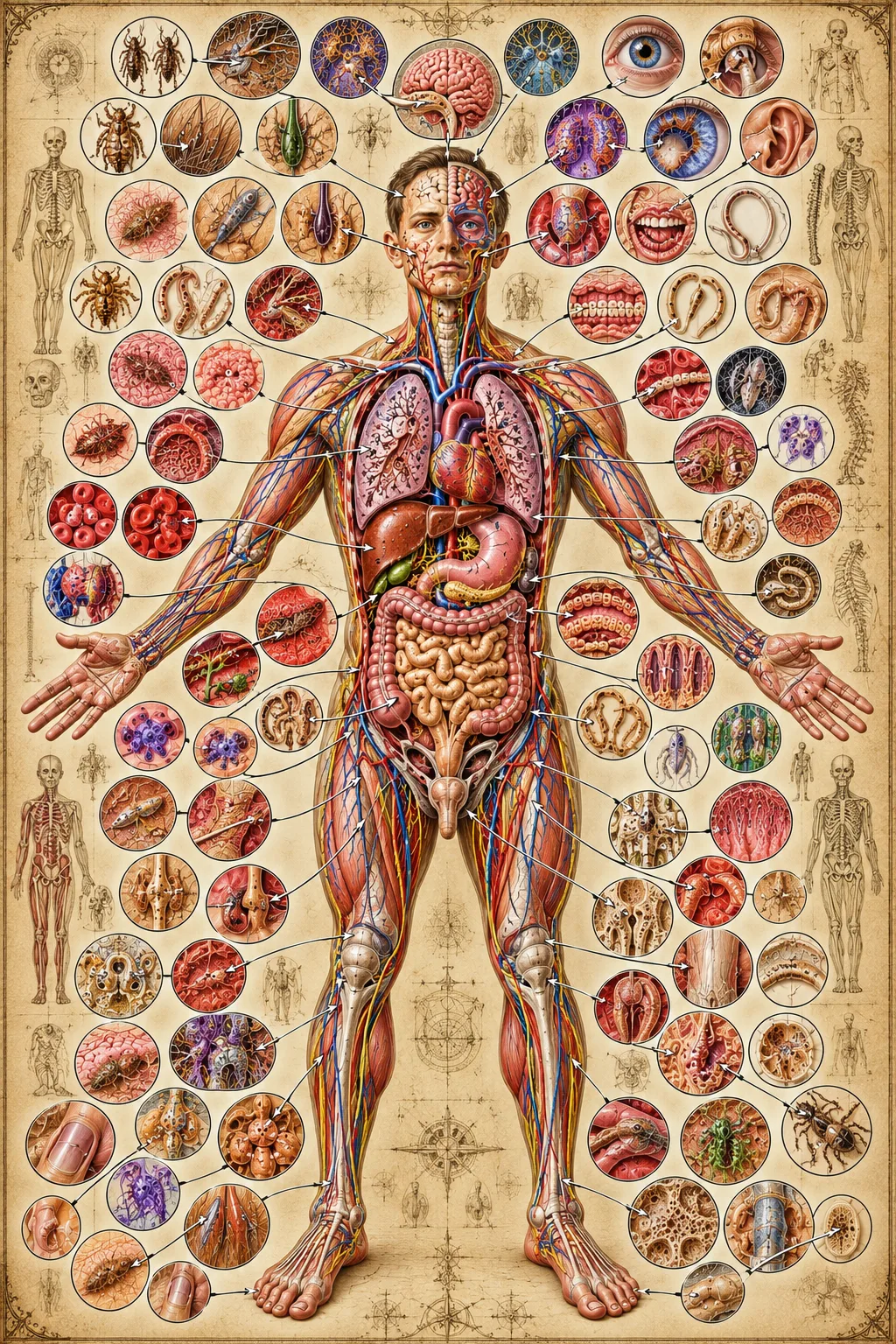
Who lives where

Tap a dot on the body map

A full-length human figure and the places where parasites and fungi live in the body

Tap a red dot to see which parasites live in that place.

Schematic only.

Friends

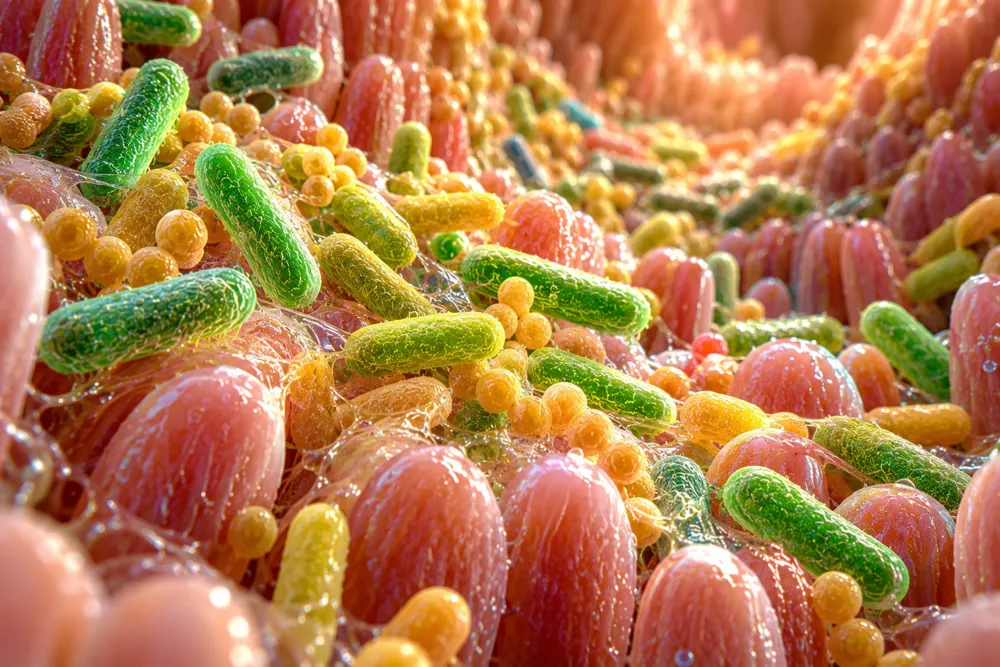
Helpful residents: bacteria and yeasts. We need them for digestion, immunity and protection from foreign microbes.

Illustration

Bifidobacteria

Bifidobacterium

Rods with forked ends shaped like the letter Y. In breastfed infants they dominate the gut.

Where it lives
The large intestine. They are most numerous in the first months of life and make up a smaller share in adults.
How it gets in
From the mother at birth and through breast milk. Milk contains special oligosaccharides (HMOs) that humans cannot digest but bifidobacteria can.
What it can do
They break down complex carbohydrates, supply the body with short-chain fatty acids and take part in the maturation of the child's immune system.
What is done about it
Numbers drop after courses of antibiotics and with a monotonous diet. In most cases they recover on their own; supplements are not needed by everyone.

observations and studies

Lactobacilli
Illustration

Lactobacilli

Lactobacillus and related genera

Gram-positive rods that produce lactic acid. They live in the mouth, gut and vagina.

Where it lives
The vagina of healthy women of reproductive age: in many of them Lactobacillus dominates and the environment there is acidic (pH about 4). Also the mouth and small intestine.
How it gets in
From the mother at birth, then with food (kefir, yoghurt, sauerkraut) and from the surroundings.
What it can do
They acidify the environment and keep foreign microbes from multiplying. Some strains are used as probiotics.
What is done about it
The effect depends on the specific strain. "Lactobacilli in general" promise nothing: look at the strain and the indication.

observations and studies

Illustration

Large intestine bacteria

Faecalibacterium, Bacteroides, Akkermansia and hundreds of others

The bulk of the gut flora. It is a community of many hundreds of species, not a single microbe.

Where it lives
The large intestine. By an estimate of Sender, Fuchs and Milo (2016), the human body has about as many bacterial cells as human cells, that is, roughly 1:1.
How it gets in
They form in the first three years of life and later depend strongly on diet, medicines and lifestyle.
What it can do
Butyrate and other fatty acids feed the cells of the intestinal wall. The make-up of the flora is linked to immunity and metabolism, but in many cases causation has not yet been proven.
What is done about it
Antibiotics reduce diversity. In severe repeated C. difficile infection, fecal microbiota transplantation (FMT) is used: in the van Nood 2013 trial recovery came in 81% against 31% on vancomycin.

randomised trial

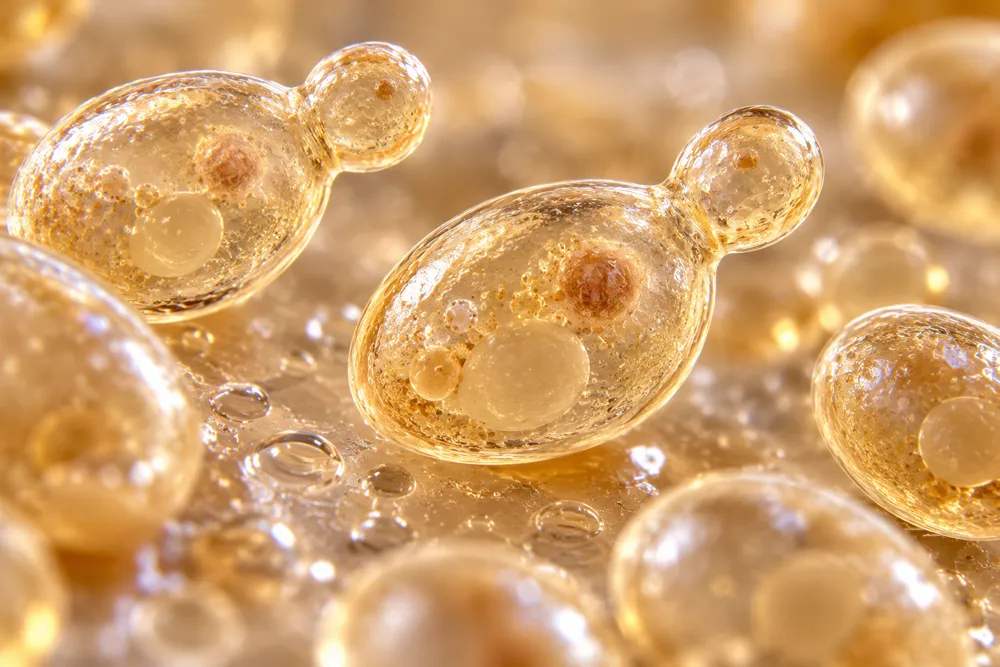
Saccharomyces boulardii
Illustration

Saccharomyces boulardii

Saccharomyces boulardii

A yeast used as a probiotic. It is not a permanent resident of the gut but a temporary guest.

Where it lives
It passes through the gut without settling for long.
How it gets in
Taken as capsules or powder.
What it can do
There are studies on reducing antibiotic-associated diarrhoea and travellers' diarrhoea. The effect is moderate.
What is done about it
Not given in severe immune deficiency or with a central venous catheter: cases of fungaemia have been described.

clinical studies

What studies say about probiotics

There is evidence for specific situations: preventing antibiotic-associated diarrhoea, treating recurrent C. difficile infection (faecal transplant), and helping with some forms of diarrhoea in children. For most other claimed effects (better mood, weight loss, treating "everything") the data are weak and depend on the strain. reviews

If you take probiotics together with antibiotics, ask your doctor about the interval between doses.

Fungi

A separate kingdom. Some live with us peacefully, others feed on skin and nails.

Candida
Illustration

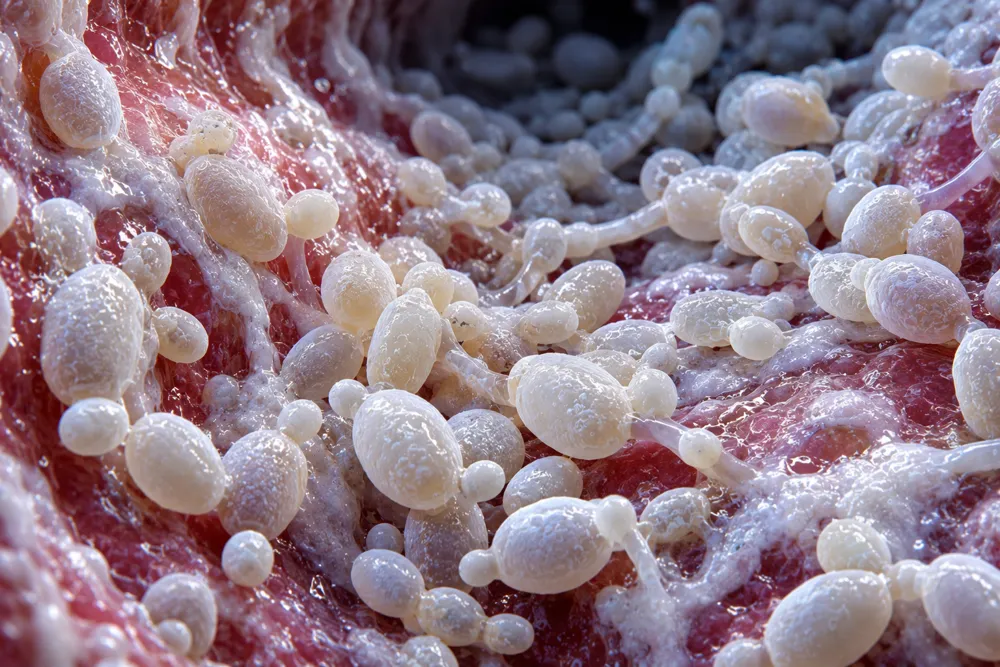
Candida

Candida albicans

A yeast-like fungus. A normal resident of the mouth, gut and vagina in many healthy people.

Where it lives
Mucous membranes, skin folds.
How it gets in
Most often it is our own flora. Overgrowth increases after antibiotics, with diabetes, inhaled steroids or weakened immunity.
What it can do
Thrush, candidiasis of the mouth and skin folds. In people with severe immune deficiency an invasive form is possible, which is a dangerous condition. "Chronic intestinal candidiasis", offered to explain fatigue and sugar cravings, is not confirmed as a diagnosis.
What is done about it
Topical antifungals, fluconazole for widespread forms; the cause is established first.

CDC and guideline data

Dermatophytes
Illustration

Dermatophytes

Trichophyton rubrum and relatives

Fungi that feed on the keratin of skin, hair and nails. This is true parasitism on humans.

Where it lives
Feet, nails, groin, scalp.
How it gets in
Through the damp floors of saunas and swimming pools, shared shoes and towels, and from animals (cats, dogs).
What it can do
Athlete's foot, onychomycosis (a thickened nail plate), ringworm.
What is done about it
Nails usually need tablets: terbinafine gives a mycological cure in about two out of three, and relapses are common. This is an order of magnitude from reviews; in practice it depends on the regimen and the nail.

clinical studies

Malassezia
Illustration

Malassezia

Malassezia

Lipophilic yeasts that live on the skin of most people, especially on the scalp and face.

Where it lives
Oily areas of the skin.
How it gets in
Present from infancy.
What it can do
Involved in dandruff and seborrhoeic dermatitis, but the cause is the combination of the fungus and the features of the skin, not an "infection".
What is done about it
Shampoos with ketoconazole, ciclopirox or zinc pyrithione.

observations

Protozoa

Single-celled parasites that can only be seen under a microscope.

Illustration

Giardia

Giardia lamblia (intestinalis)

A flagellate protozoan with a "face" on its back under the microscope. One of the most common intestinal parasites in the world.

Where it lives
Small intestine.
How it gets in
Cysts from water, food and dirty hands. You can catch it on a hike from a stream, in a swimming pool, in kindergarten.
What it can do
In many people it causes no symptoms. When there are symptoms: bloating, loose greasy stools, cramps, weight loss, milk intolerance.
What is done about it
Tinidazole, metronidazole, nitazoxanide. Treated when there are symptoms and in special situations. Helps most people, roughly 80–95% of cases.

CDC data

Illustration

Dysentery amoeba

Entamoeba histolytica

An amoeba able to grow through the intestinal wall. Not to be confused with the harmless Entamoeba dispar.

Where it lives
Large intestine, and the liver in complications.
How it gets in
Contaminated water and food in regions with poor sanitation.
What it can do
Amoebic dysentery with blood and mucus, liver abscess.
What is done about it
Metronidazole or tinidazole, followed by a drug that acts inside the gut (paromomycin).

CDC and WHO data

Illustration

Toxoplasma

Toxoplasma gondii

An intracellular protozoan. Its definitive host is the cat, but a human can become an intermediate host.

Where it lives
Muscles, brain, eyes: cysts stay in the tissues for life.
How it gets in
Raw or undercooked meat, unwashed vegetables, the cat litter tray and garden soil, and in pregnancy from mother to foetus.
What it can do
In a healthy person it most often causes no symptoms. It is dangerous in pregnancy (congenital toxoplasmosis) and in immune deficiency. A link with behavioural change and psychiatric illness is being studied; this is a hypothesis and causation has not been proven.
What is done about it
In severe forms pyrimethamine with sulfadiazine. Pregnant women need a consultation and serology before and during pregnancy.

CDC and guideline data

Illustration

Trichomonas

Trichomonas vaginalis

A flagellate protozoan. Spread through sex.

Where it lives
Urogenital tract.
How it gets in
Unprotected sex.
What it can do
Discharge, itching, burning on urination; many people have no symptoms.
What is done about it
Metronidazole or tinidazole, with simultaneous treatment of the partner.

CDC data

Illustration

Malaria Plasmodium

Plasmodium falciparum and others

A parasite of red blood cells, carried by the Anopheles mosquito.

Where it lives
Red blood cells and the liver.
How it gets in
A mosquito bite in countries of Africa, Asia and South America. In Latvia there are only imported cases.
What it can do
Attacks of fever with chills. Falciparum is life-threatening. A fever after a trip to the tropics is a reason to see a doctor urgently.
What is done about it
Modern antimalarial regimens as prescribed. Chemoprophylaxis is available before travel.

WHO data

Illustration

Cryptosporidium

Cryptosporidium hominis, C. parvum

Tiny single-celled parasites whose oocysts are very resistant in the environment. One of the most common causes of diarrhoea outbreaks after swimming.

Where it lives
Cells of the lining of the small intestine.
How it gets in
Water (pools, lakes, untreated drinking water), contact with an infected person or animal (especially calves), food. The oocysts are very resistant to chlorine and stay infectious in a pool for several days.
What it can do
Watery diarrhoea, cramps, nausea. In healthy people it usually clears up on its own in about a week (in outbreaks from 1 to 44 days). In people with weakened immunity it is severe and prolonged.
What is done about it
Healthy people need fluids and rest; nitazoxanide is prescribed by a doctor. With diarrhoea, do not swim in a pool until it has passed and for 2 weeks afterwards (CDC).

CDC data

Illustration

Blastocystis

Blastocystis spp.

A single-celled organism often found in stool tests. Its role in disease is disputed: many healthy people have it and it causes nothing.

Where it lives
Large intestine.
How it gets in
Through water and food contaminated with faeces. Often found in people who have no illness.
What it can do
Most carriers have no symptoms. In some people with diarrhoea and abdominal pain it is found, but the cause is more often something else. Doctors argue about whether it needs treatment at all.
What is done about it
If only Blastocystis is found and there are no complaints, treatment is usually not needed. If there are complaints, the doctor first looks for other causes: irritable bowel syndrome, intolerances, other parasites. Metronidazole is used in some cases; the effect is disputed.

role disputed, review by Tan 2008

Worms

Helminths: roundworms, tapeworms and flukes. Their eggs and larvae live in soil, water, meat and fish.

Illustration

Ascaris

Ascaris lumbricoides

A large roundworm, females up to 20 cm and more. One of the most widespread helminths on the planet.

Where it lives
Small intestine; during development the larvae pass through the liver and lungs.
How it gets in
Eggs from soil on vegetables, berries and hands. You cannot catch it directly from a person: the eggs have to mature in the soil.
What it can do
A light infection often passes without symptoms. When larvae migrate, a cough can occur. A heavy infestation in children leads to wasting and intestinal obstruction.
What is done about it
Albendazole or mebendazole as a single dose, high effectiveness. Ivermectin is an alternative.

WHO and CDC data

Illustration

Pinworm

Enterobius vermicularis

A small white worm 2–13 mm long. The most common helminth in children in Europe and North America.

Where it lives
The lower intestine; females come out at night.
How it gets in
Eggs on bedding, hands and toys. Children scratch and carry the eggs to their mouths.
What it can do
Night-time itching around the anus, restless sleep. There are usually no other serious consequences.
What is done about it
Mebendazole or albendazole, repeated after 2 weeks. The main problem is not the drug but reinfection: treat the whole family, wash bedding in hot water, keep nails short.

CDC data

Illustration

Whipworm

Trichuris trichiura

A worm 3–5 cm long with a thin "whip" at the front; it wedges into the lining of the large intestine.

Where it lives
Large intestine.
How it gets in
Eggs from soil, unwashed vegetables and dirty hands.
What it can do
Light forms have no symptoms. Heavy ones: bloody diarrhoea, anaemia, rectal prolapse in children.
What is done about it
A single course works poorly: in a 2017 BMJ meta-analysis the cure rate was 42.1% with mebendazole and 38.6% with albendazole. So repeated courses or combinations are needed; the doctor decides.

meta-analysis, BMJ 2017

Illustration

Hookworm and Necator

Ancylostoma duodenale, Necator americanus

Small roundworms that attach to the intestinal wall and feed on blood.

Where it lives
Small intestine.
How it gets in
Larvae enter through the skin when a person walks barefoot on contaminated soil in warm regions.
What it can do
Chronic blood loss and iron-deficiency anaemia, especially in children and pregnant women.
What is done about it
Albendazole: a cure rate of 79.5% in the 2017 BMJ meta-analysis with a single dose. Plus treatment of the anaemia.

meta-analysis, BMJ 2017

Illustration

Strongyloides (threadworm)

Strongyloides stercoralis

A tiny worm able to multiply inside a person and reinfect them by itself.

Where it lives
Small intestine, skin, lungs.
How it gets in
Larvae enter through the skin from soil in warm countries.
What it can do
Chronic skin and intestinal complaints. Hyperinfection is dangerous with steroids and immunosuppressants: it can be fatal. The infection can persist for decades.
What is done about it
Ivermectin, first-line treatment. People from endemic regions are usually tested for it before long-term steroids are prescribed.

CDC data

Illustration

Trichinella

Trichinella spp.

A roundworm whose larvae form cysts in the host's muscles.

Where it lives
The intestine, then the striated muscles.
How it gets in
Raw and undercooked meat of wild boar, domestic pig, bear, badger and other animals. With wild boar meat, freezing does not guarantee safety.
What it can do
Fever, muscle pain, swelling of the eyelids and face, high eosinophilia.
What is done about it
Albendazole or mebendazole; in severe cases steroids are added at the doctor's discretion.

CDC and ECDC data

Illustration

Toxocara

Toxocara canis, T. cati

A roundworm of dogs and cats. A human is an accidental host for it.

Where it lives
The larvae migrate through the organs and do not mature.
How it gets in
Eggs in sand, soil, grass and on animal fur, then on hands and into the mouth. Children are affected most often.
What it can do
Visceral and ocular toxocariasis, raised eosinophils, sometimes damage to the eye.
What is done about it
Albendazole; diagnosis by serology and clinical findings. Prevention: deworming pets, hand washing, covered sandpits.

CDC data

Illustration

Beef tapeworm

Taenia saginata

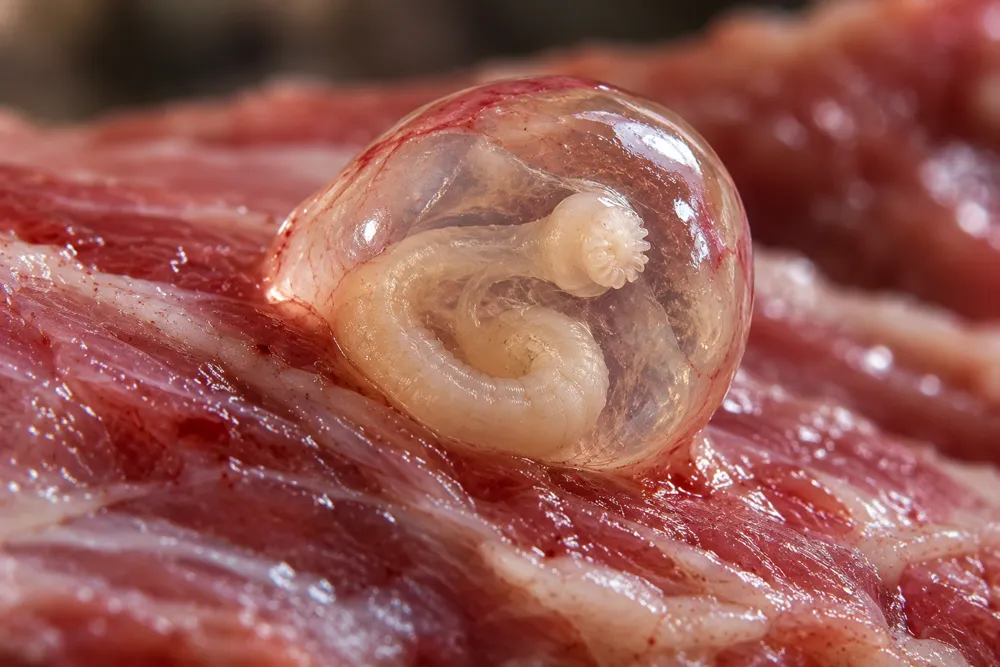
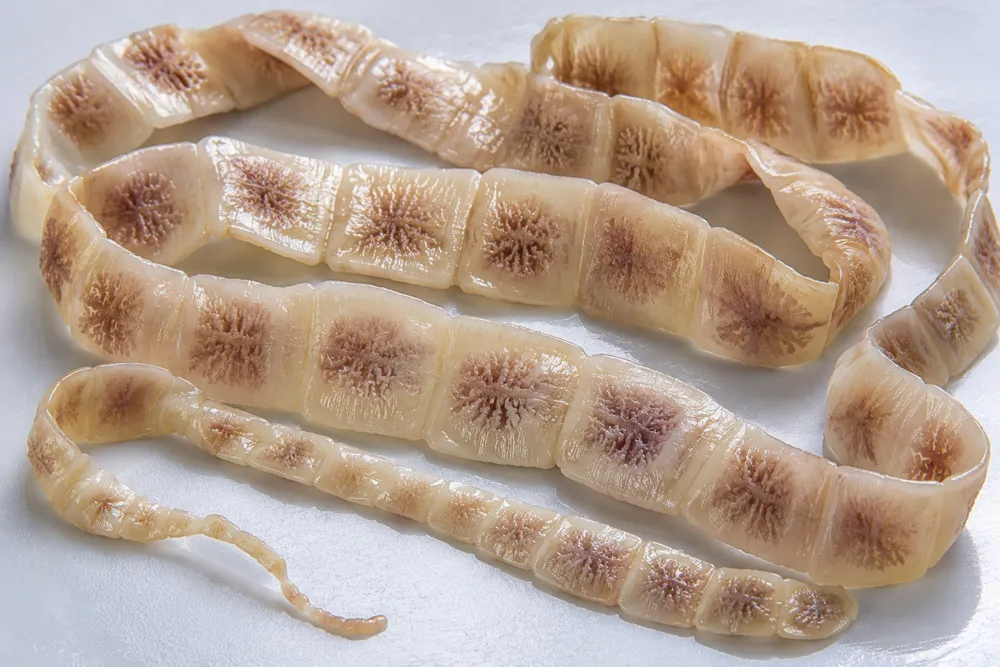
A tapeworm up to 10 m long, made of segments with a head (scolex).

Where it lives
The human small intestine.
How it gets in
Beef with cysticerci that was eaten raw or undercooked.
What it can do
Mild symptoms: abdominal pain, weight loss, segments on underwear. People often notice the segments themselves.
What is done about it
Praziquantel or niclosamide in a single dose.

CDC data

Pork tapeworm
Illustration

Pork tapeworm

Taenia solium

A tapeworm of pigs whose adult stage lives in humans. The most dangerous of the tapeworm infections.

Where it lives
The intestine. And when eggs get into the mouth, the larvae spread through the tissues: brain, muscles, eyes.
How it gets in
Undercooked pork with cysticerci. And the carrier sheds eggs, so you can be infected from them through dirty hands and food.
What it can do
Cysticercosis, in the brain neurocysticercosis: seizures, headaches. One of the common causes of acquired epilepsy in endemic regions.
What is done about it
The intestinal form is treated with praziquantel. Neurocysticercosis is treated only under specialist supervision: albendazole with control of the inflammation around the cysts.

WHO and CDC data

Fish tapeworm
Illustration

Fish tapeworm

Diphyllobothrium latum

The longest parasite of humans: it can reach 10 m and more. Infection is linked to fish.

Where it lives
Small intestine.
How it gets in
Raw, lightly salted, lightly cooked freshwater fish: pike, perch, ruffe, burbot and others.
What it can do
Often no symptoms. Because it takes up vitamin B12, B12-deficiency anaemia is possible.
What is done about it
Praziquantel, and vitamin B12 for anaemia. Prevention: cook fish thoroughly or deep-freeze it.

CDC data

Echinococcus
Illustration

Echinococcus

Echinococcus granulosus, E. multilocularis

A small tapeworm of dogs and foxes. In humans it forms cysts.

Where it lives
Liver, lungs; alveolar Echinococcus grows like a tumour.
How it gets in
Eggs from dog fur, from soil, from forest berries and mushrooms, from water.
What it can do
Slowly growing cysts, pain under the right ribs, cough; rupture of a cyst is dangerous.
What is done about it
Surgery, puncture techniques and albendazole. Lithuania reports the highest rate in the EU per 100,000 people (ECDC, 2022).

ECDC and WHO data

Cat liver fluke
Illustration

Cat liver fluke

Opisthorchis felineus

A liver fluke whose cycle has two intermediate hosts: a snail and a cyprinid fish.

Where it lives
Bile ducts, liver, pancreas.
How it gets in
Raw, frozen-sliced (stroganina), dried or lightly salted cyprinid fish (ide, roach, bream, dace). The largest focus lies in Siberia, and there are foci in Eastern Europe.
What it can do
Chronic cholangitis, heaviness under the right ribs, digestive disorders. For related species (O. viverrini, Clonorchis sinensis) a link with bile duct cancer has been established.
What is done about it
Praziquantel; a repeat stool test after 3–4 weeks. Freezing fish at −20 °C for at least a week is considered reliable.

CDC and IARC data

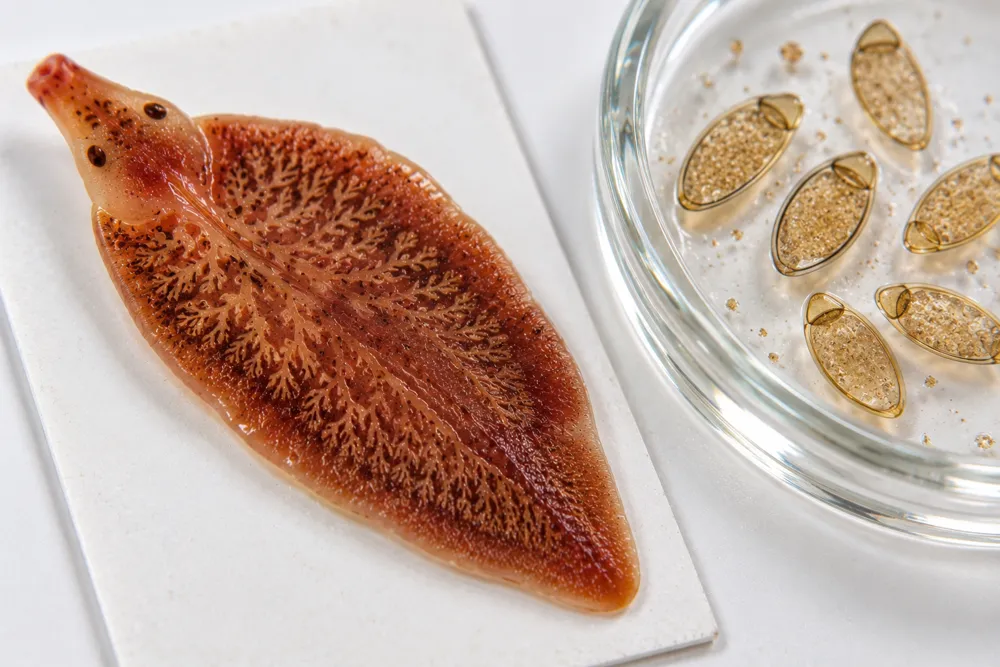
Illustration

Liver fluke (Fasciola hepatica)

Fasciola hepatica

A large fluke of sheep and cattle.

Where it lives
Liver and bile ducts.
How it gets in
Watercress and other greens grown in water where animals graze; water from streams.
What it can do
Fever, liver pain, eosinophilia, then chronic cholangitis.
What is done about it
Triclabendazole. Praziquantel does not work for fascioliasis.

CDC data

Schistosoma
Illustration

Schistosoma

Schistosoma haematobium and others

A blood fluke. The larvae penetrate the skin in fresh water.

Where it lives
Vessels of the bladder (S. haematobium) or intestine (other species).
How it gets in
Swimming in fresh water in Africa and other tropical regions.
What it can do
Blood in the urine, chronic inflammation; S. haematobium is recognised as a carcinogen (IARC, group 1).
What is done about it
Praziquantel. The danger concerns travellers; it does not occur in Latvia.

WHO and IARC data

Illustration

Dwarf tapeworm

Hymenolepis nana

The smallest tapeworm of humans: 15–40 mm. The only tapeworm that needs no intermediate host, so it passes directly from person to person.

Where it lives
Small intestine.
How it gets in
Eggs get into the mouth from unwashed hands, soil and food. In families and children's groups people infect each other. Sometimes it is carried by small beetles in grain and flour.
What it can do
Most often no symptoms. In heavy infection: nausea, weakness, loss of appetite, abdominal pain, diarrhoea; in children also headache, itching around the anus and poor sleep.
What is done about it
The drug of choice is praziquantel, and a second course is sometimes needed. Treated as prescribed by a doctor, and hand and nail hygiene is essential in the family and the group.

CDC data

Illustration

Dog tapeworm

Dipylidium caninum

A tapeworm of dogs and cats. Its segments look like grains of rice or cucumber seeds and crawl out by themselves.

Where it lives
The small intestine of a dog or cat; rare in humans, more often in children.
How it gets in
A flea is needed: flea larvae swallow the worm's eggs. A person, more often a child, accidentally swallows a flea while playing with a pet. Pets are infected in the same way.
What it can do
Most often no symptoms or mild abdominal discomfort. The most noticeable sign is moving segments in the stool, a nappy, on underwear or on the floor: they are mistaken for fly larvae.
What is done about it
Treatment by a doctor, usually praziquantel. The pet needs an anthelmintic and flea treatment, or the infection will return; fleas are also eliminated from the home.

CDC data

Illustration

Anisakis

Anisakis simplex (larvae in sea fish)

Thin nematodes about 2 cm long, coiled in a spiral. They live in sea fish and squid: herring, cod, salmon, mackerel. For humans it is an accidental and unwelcome host.

Where it lives
The larva tries to burrow into the lining of the stomach or intestine and dies after a few days. Adult worms live in marine mammals.
How it gets in
Raw, lightly salted, pickled and lightly cooked sea fish and squid: herring, sushi and sashimi, ceviche, tartare.
What it can do
A few hours after eating: abdominal pain, nausea, vomiting; an allergic reaction is possible (rash, itching, rarely severe). Sometimes tingling in the mouth or throat.
What is done about it
The larva is removed with an endoscope, and drugs are usually not needed. Prevention: cook fish to 63 °C inside, or freeze at −20 °C for 7 days, or at −35 °C until solid and keep for 15 hours (FDA). Ordinary salting and pickling do not kill the larvae.

CDC and FDA data

Dirofilaria
Illustration

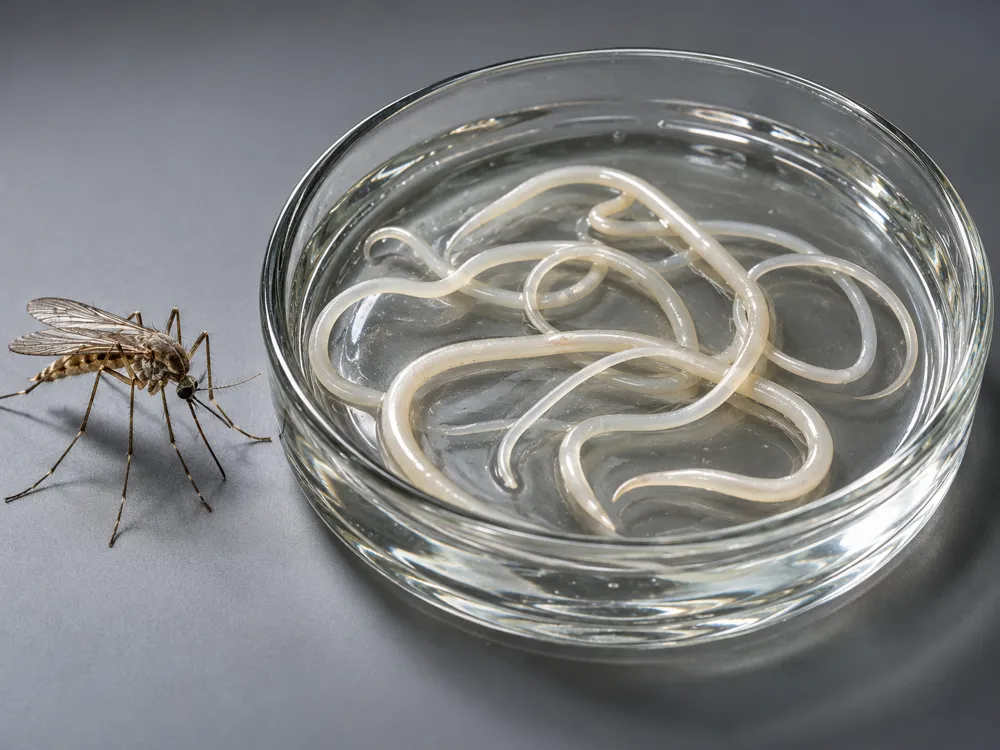
Dirofilaria

Dirofilaria repens

A filarial worm of dogs that reaches humans through mosquitoes. A human is a dead end for it: the worm usually does not mature or reproduce.

Where it lives
Under the skin (a moving nodule, including on the face) and under the membrane of the eye.
How it gets in
The bite of a mosquito that earlier fed on an infected dog. You do not catch it directly from a dog.
What it can do
Often no symptoms. A moving subcutaneous nodule or lump, itching, a feeling of "crawling"; in the eye form redness and pain. A nodule on the face is often mistaken for a cyst or tumour.
What is done about it
The worm is removed surgically, which is usually enough; there are no uniform treatment standards. It is confirmed from the worm itself by molecular analysis: there are no ready-made blood tests. Prevention for a dog is prescribed by a vet. Human cases are described in Lithuania, Latvia and Estonia; in 2023 two local cases were confirmed in Estonia.

CDC data (Emerging Infectious Diseases)

Cutaneous larva migrans
Illustration

Cutaneous larva migrans

Ancylostoma braziliense and relatives

Larvae of dog and cat hookworms. In humans they do not reach the intestine and wander in the upper layers of the skin.

Where it lives
Upper layers of the skin, most often feet, shins, buttocks.
How it gets in
Warm damp sand and soil where dog and cat faeces have landed: walking barefoot, lying on a beach without a mat. More common in the tropics and subtropics; in Europe cases are mostly imported.
What it can do
A red, winding, itchy track that slowly lengthens over days. Severe itching, scratching.
What is done about it
Ivermectin or albendazole as prescribed by a doctor; without treatment it clears up in weeks or months. Prevention: shoes on the beach, a mat, keeping dogs off beaches where it is forbidden.

CDC and MSD reference data

Lice and mites

External parasites: they live on the skin and hair or attach themselves for a time.

Illustration

Scabies mite

Sarcoptes scabiei

A microscopic mite about 0.4 mm long. It digs tunnels in the upper layer of the skin.

Where it lives
Skin: the spaces between the fingers, wrists, waist, genitals.
How it gets in
Prolonged body contact, sometimes shared bedding. The most common routes: household contact and sexual contact.
What it can do
Severe itching, especially at night, and fine tunnels with a rash. The itching persists for another 2–4 weeks after the mites have died.
What is done about it
Permethrin 5% cream, repeated after 1–2 weeks, or ivermectin by mouth. All household members are treated at the same time, and bedding is washed hot and dried.

CDC data

Illustration

Head louse and pubic louse

Pediculus humanus capitis, Pthirus pubis

Wingless insects that feed on blood. They live on hair.

Where it lives
Hair of the head and pubic area.
How it gets in
Head-to-head contact, shared combs and hats (less often); for pubic lice, sexual contact.
What it can do
Itching, scratch marks, nits on the hair.
What is done about it
Dimethicone products and thorough combing. In many regions lice are resistant to permethrin.

CDC data

Demodex
Illustration

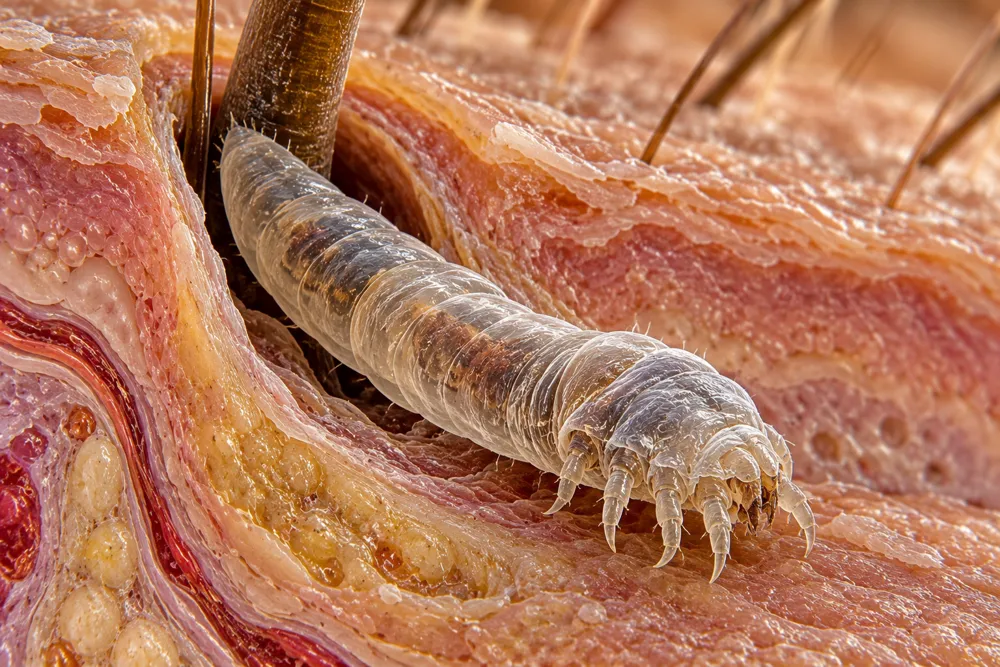
Demodex

Demodex folliculorum, D. brevis

A microscopic mite of the hair follicles and sebaceous glands of the face.

Where it lives
Face, eyelashes.
How it gets in
Skin contact: most adults carry the mite.
What it can do
Normally nothing. In blepharitis and rosacea its numbers rise and it takes part in the inflammation. It is treated only when there are symptoms. In 2023 the FDA approved lotilaner for Demodex blepharitis.
What is done about it
Eyelid hygiene, tea tree oil (for blepharitis), ivermectin for the skin as prescribed by a doctor.

FDA and ophthalmologists' data

Illustration

Ixodid tick

Ixodes ricinus

An arachnid that attaches itself and feeds on blood. The danger is not the tick itself but what it carries.

Where it lives
It attaches to the skin for several days.
How it gets in
A bite in grass and undergrowth from spring to autumn.
What it can do
Lyme disease (borreliosis) and tick-borne encephalitis. In Latvia the incidence of tick-borne encephalitis is one of the highest in Europe (SPKC data).
What is done about it
The tick is removed with tweezers or a special hook as soon as possible, and the spot is disinfected. There is a vaccine against encephalitis and none against borreliosis, but it can be treated with antibiotics. Oil, alcohol and burning are not used.

ECDC and SPKC data

Illustration

Bed bugs and fleas

Cimex lectularius, Ctenocephalides felis

These are not internal parasites, but people look for them more often than any others: they bite, cause itching and anxiety. The bed bug is not considered to transmit diseases to humans.

Where it lives
Bed bugs live in the cracks of the bed, mattress and furniture and come out to feed at night. Fleas live on the pet and in its bedding.
How it gets in
Bed bugs: from hotels, second-hand furniture and in a suitcase. Fleas: from a cat or dog, from basements. A flea is also the intermediate host of the dog tapeworm.
What it can do
Bed bugs: lines of red itchy bumps in the morning. Fleas: small bites, more often on the shins and ankles. Severe itching, scratching, and in some people an allergic reaction.
What is done about it
Bed bugs are eliminated by professional treatment; bedding is washed at 60 °C and dried. Fleas: treat the pet with a veterinary product and clean the home. If the itching is severe, ask a pharmacist or doctor.

CDC reference data

Stomach bacterium

Not a parasite in the strict sense, but a lodger people ask about more than any other.

Illustration

Helicobacter pylori

Helicobacter pylori

A spiral bacterium with a tuft of flagella. The only bacterium that survives in the acidic environment of the stomach: it neutralises the acid around itself with the enzyme urease.

Where it lives
The lining of the stomach, under a layer of protective mucus.
How it gets in
Most often in childhood, within the family: through saliva, shared dishes, contaminated water. About half of the world's population is infected.
What it can do
Most carriers have no symptoms. It can cause chronic gastritis and an ulcer of the stomach or duodenum; it raises the risk of stomach cancer (IARC, group 1).
What is done about it
A regimen of a proton pump inhibitor and several antibiotics as prescribed by a doctor, usually about two weeks. With modern regimens the success rate is most often about 80–90%, but antibiotic resistance is growing. The result is checked after treatment.

WHO and IARC data

Ticks and the forest

Two infections that really do occur here, and what to do after a bite.

Illustration

Of all the parasites in Latvia, ticks are the most dangerous: they carry two common infections. One of them is preventable with a vaccine.

Illustration

Tick-borne encephalitis

TBEV virus (a flavivirus)

A virus that attacks the nervous system. It is the only tick-borne infection for which there is a vaccine.

Where it lives
First the blood, then in some patients the membranes of the brain and the brain itself.
How it gets in
A tick bite; the virus enters quickly, so there is no need to wait a day. Rarely through raw milk of goats and cows from an infected area.
What it can do
The first phase is like influenza: fever, headache, aching, 1–2 weeks after the bite. In some people a second phase follows: meningitis or encephalitis, and lasting after-effects are possible. There is no drug against the virus itself, and treatment is supportive.
What is done about it
Vaccine: a full course and boosters on schedule protect against the severe forms too. In Latvia 186 cases were registered in 2025, 20 more than in 2024; in 2026 vaccination of children in some municipalities is paid for by the state through the family doctor.

SPKC data

Illustration

Borrelia (Lyme disease)

Borrelia burgdorferi s.l., B. afzelii, B. garinii

A spiral bacterium carried by ixodid ticks. In Europe it is most often B. afzelii and B. garinii.

Where it lives
Skin, joints, nerves, sometimes the heart. The disease goes through stages.
How it gets in
A tick bite: the risk rises if the tick has been attached for more than a day. Not every tick is infected, and not every bite ends in disease.
What it can do
After 3–30 days, a red expanding patch at the site of the bite, fever, fatigue, muscle and joint pain. Not everyone gets the patch. Without treatment, after weeks and months damage to nerves, joints and heart is possible. In Latvia 539 cases were registered in 2025, 180 more than a year earlier.
What is done about it
Antibiotics, most often doxycycline, a course as prescribed by a doctor: the early stages respond well to treatment. There is no vaccine. A single dose of doxycycline after a bite is recommended in the USA only under strict criteria; in Latvia the decision is made by the doctor.

SPKC and CDC data

If a tick has bitten you: step by step

  1. Remove the tick as quickly as possible, do not wait for a doctor. Take tweezers or a special hook, grip the tick as close to the skin as possible and pull straight and smoothly.
  2. Do not squash, twist or jerk the tick. Do not use oil, alcohol, varnish or fire: the tick may expel its contents into the wound.
  3. If parts of the head remain, remove them with tweezers. Treat the spot with soap and water or an antiseptic.
  4. Write down the date and place of the bite. The tick can be kept in a closed jar, but treatment is usually not prescribed on the basis of testing the tick itself.
  5. Watch yourself for 4 weeks. A red expanding patch, fever, headache, joint pain or weakness: see a doctor and mention the bite.
  6. Check whether you have been vaccinated against tick-borne encephalitis. Whether to take an antibiotic after a bite is decided by the doctor, based on timing and where you were.

Sources: MSD Manual: how to remove a tick SPKC, 2025 data as reported by lvportals.lv

How we get infected

Eight main routes and what to do about them.

Illustration

Hands and soil

Eggs of Ascaris, whipworm, Toxocara, pinworm. Wash hands, wash vegetables and greens, cover sandpits.

Water

Giardia, amoeba, Cryptosporidium. Drink water from a stream or lake only after boiling or filtering.

Meat

Pork and beef tapeworms, Trichinella, Toxoplasma. Cook until done, and do not eat raw mince or sausage made from private meat without veterinary inspection.

Fish

Fish tapeworm, cat liver fluke. Do not eat raw freshwater fish; boil it, fry it thoroughly or freeze it at −20 °C for at least 7 days.

Animals

Toxocara, Toxoplasma, Echinococcus. Deworm pets, wash hands, wear gloves when working with soil and the cat litter tray.

Skin and soil

Hookworm, Strongyloides, Schistosoma. In the tropics do not walk barefoot and do not swim in fresh water.

Bites

Malaria (mosquitoes), ticks. Use repellent, wear covering clothing, check your body after the forest.

Contact

Scabies, lice, trichomoniasis. Treat contacts at the same time.

Prevention comes down to simple things: wash hands and vegetables, drink clean water, do not eat raw or undercooked meat and fish, deworm pets, use repellent, check your body after the forest. Freezing does not make wild boar meat safe from Trichinella, so such meat is tested in a laboratory and cooked until done.

From animals

Who passes on what, and how to keep your pet safe.

Dog and cat at home
Illustration

Pets rarely infect people if they are looked after. The risk rises when the animal roams unsupervised, eats raw meat, carries fleas or is not treated for worms.

AnimalWhat you can catchHowWhat to do
DogToxocara, Echinococcus, Giardia, dog tapeworm (through fleas), cutaneous larva migrans, Dirofilaria (through mosquitoes), ticksEggs from fur and soil, faeces in the street, a flea, a mosquito biteDeworming and flea and tick treatment on the vet's schedule; pick up faeces; wash hands after a walk and before eating
CatToxoplasma, Toxocara, dog tapeworm (through fleas), fleas, ticksFaeces in the litter tray, sand and soil, fleasClean the litter tray every day wearing gloves: Toxoplasma oocysts become infectious after 1–5 days. Do not feed the cat raw meat; treat for fleas
Rodents (mice, rats, hamsters)Dwarf tapewormEggs from bedding and the cageGloves when cleaning the cage, wash hands
Foxes, wild animalsEchinococcus (fox and common), Trichinella (wild boar)Eggs in soil, on berries and grass; raw game meatDo not eat unwashed berries and greens from the forest; have game meat tested in a laboratory and cook it until done

How to deworm pets

The ESCCAP recommendations (the European Scientific Counsel Companion Animal Parasites) are based on risk, not on the calendar. For cats:

  • If the cat lives indoors only: against roundworms 1–2 times a year or based on a stool test.
  • If the cat goes outside and hunts: against roundworms 4–12 times a year or based on a stool test, and against tapeworms also 4–12 times a year.
  • Kittens: the first treatment at 3 weeks, then every 2 weeks until weaning, and at high risk monthly until 6 months.
  • Cats that catch rodents, in regions where the fox tapeworm occurs: monthly treatment prevents the shedding of eggs.

For dogs the schedules also depend on lifestyle; the vet chooses the frequency. ESCCAP

Pregnancy and cats

Toxoplasmosis during pregnancy is dangerous for the foetus. Someone else should clean the litter tray; if that is not possible, do it daily and wear gloves. Eat only well-cooked meat, wash vegetables and greens, wash hands after soil and sand. Ask your doctor whether a toxoplasmosis test is needed in your case. CDC

Do not treat yourself.

Prevention

What really works, and what is not needed.

Clean vegetables and hands
Illustration

Hands

With soap after the toilet, after being outdoors, after soil, after contact with animals and before eating. This is the cheapest protection against the eggs of Ascaris, pinworm, Toxocara and dwarf tapeworm.

Meat

Cook whole cuts of meat to 63 °C and hold for 3 minutes, mince to 71 °C, poultry to 74 °C (CDC). A thermometer is more reliable than colour. Wild boar meat and private pork: only after laboratory testing for Trichinella and when fully cooked.

Fish

Cook to 63 °C inside or freeze: −20 °C for 7 days, or −35 °C until solid and hold for 15 hours (FDA). Lightly salted and pickled fish without freezing does not guarantee safety. Do not eat freshwater fish raw: fish tapeworm and liver flukes.

Vegetables and greens

Wash under running water; berries and greens from the forest and the vegetable patch especially thoroughly: they can carry the eggs of Echinococcus and Toxocara.

Water

Drink water from streams, lakes and shallow wells only after boiling or filtering. Chlorine does not kill Cryptosporidium, so do not swallow water in a swimming pool.

Children

Short nails, hand washing after being outdoors and after the toilet, a covered sandpit, no chewing toys from outside. This protects against pinworms, Giardia and Toxocara.

Pets

Deworming and flea and tick treatment on the vet's schedule, gloves when cleaning the litter tray, pick up faeces.

Forest and travel

Covering clothing, repellent, checking your body after the forest, vaccination against tick-borne encephalitis. In the tropics do not walk barefoot and do not swim in fresh water.

Preventive "cleanses" and worm tablets for the whole family every six months, without tests or symptoms, are not needed. Treatment follows a diagnosis or real contact, as with pinworms or scabies. This is the position of infectious disease specialists; the decision remains with the doctor.

What conditions they cause

A symptom is non-specific: more often the cause is something else.

Illustration
ConditionWhich parasites may be the causeImportant
AnaemiaHookworm, heavy whipworm infection, fish tapeworm (through vitamin B12)Iron deficiency more often has other causes: blood loss, diet.
Diarrhoea, bloating, weight lossGiardia, Cryptosporidium, Strongyloides, amoebaMost often the cause is different: intolerance, irritable bowel syndrome, viruses.
Night itching around the anusPinwormsAlmost always pinworms; diagnosed with sticky tape.
Night itching of the skin, rash in the foldsScabies miteItching in several family members at once points to scabies.
Pain under the right ribs, jaundiceLiver flukes, EchinococcusMore often it is gallstone disease or hepatitis; diagnosis is needed.
SeizuresNeurocysticercosis (pork tapeworm)One of the causes of epilepsy in endemic regions; rare in Latvia.
Cough, raised eosinophilsLarval migration (Ascaris, Strongyloides, Toxocara)Eosinophilia is more often allergic.
Muscle pain, swollen eyelids, feverTrichinellosisThink of wild boar meat or home-made sausage without testing.
Fever after a tripMalariaSee a doctor urgently: it can become severe within hours.
Stunted growth in childrenChronic helminth infections (in poor regions)In Europe the cause is usually different.

You suspect something

What to do step by step and when you must not wait.

Laboratory
Illustration

A suspicion of parasites is not a reason to start a "cleanse". Diagnosis first, then treatment.

  1. Do not start treatment yourself and do not take "antiparasitic" herbs to make sure. They can distort the test.
  2. Write down: which symptoms and for how long, whether there were trips, raw fish or meat, pets, the forest, bites, who else in the family has the same.
  3. Go to the family doctor. They will order tests and, if necessary, refer you to an infectious disease specialist or a gastroenterologist.
  4. Have the test that fits your complaint (table below). A stool sample is submitted fresh in a clean container; one sample is often not enough: parasites are shed unevenly, and 2–3 samples on different days are often taken. If you have taken laxatives, barium or antibiotics, tell the laboratory.
  5. If you have found a worm or a segment, keep it in a closed jar and show it to the doctor.
  6. If parasites are confirmed, treat according to the doctor's regimen, and have your contacts examined and treated together with you if the doctor says so (pinworms, scabies, lice).
  7. Check the result after treatment as the doctor tells you: with a follow-up test, not by how you feel.

If you have… the usual test is

Symptom or situationWhat is usually ordered
Night itching around the anusSticky tape in the morning before washing, on 3 mornings in a row (pinworms)
Diarrhoea for more than 1–2 weeks, bloating, weight lossStool test: antigen tests or PCR for Giardia and Cryptosporidium, microscopy, culture
Night itching of the skin, in several family membersExamination by a doctor and dermatoscopy (scabies)
Pain under the right ribs, yellow discolourationLiver ultrasound, liver tests, serology for Echinococcus and flukes; see a doctor urgently
High eosinophils in the blood testThe doctor looks for the cause: more often allergy; after a trip or contact a stool test and serology are added
Fever after a trip to the tropicsUrgent examination and a blood test for malaria the same day
You have seen a worm, a segment or a larvaKeep it in a jar and bring it to the laboratory or the doctor
A tick has bittenThe steps in the "Ticks and the forest" section

See a doctor urgently if

  • fever for months after a trip to the tropics: do not wait for it to pass
  • seizures, sudden weakness in an arm or leg, confusion
  • severe abdominal pain with vomiting after raw fish or game meat
  • blood in the stool, black stool, severe dehydration (diarrhoea for more than 2–3 days, being unable to drink; especially in children and the elderly)
  • after a tick bite an expanding red patch, fever, severe headache or a stiff neck
  • muscle pain, swollen eyelids and fever after wild boar meat or home-made sausage without testing (possible trichinellosis)

Do not treat yourself.

How they are found

Which tests can be trusted.

Stool microscopy
Several samples on different days: parasites are shed unevenly. Suitable for Giardia, helminths, amoebae.
Sticky tape
In the morning before washing, the tape is pressed to the skin around the anus. For pinworms.
Antigen tests and PCR
Giardia, Cryptosporidium, some helminths. More accurate than microscopy in difficult cases.
Serology
Toxoplasma, toxocariasis, Echinococcus, strongyloidiasis, trichinellosis. It shows contact, not always an active infection.
Complete blood count
Eosinophilia suggests a helminth infection, but is more often linked to allergy.
Imaging
Ultrasound, CT, MRI for cysts and brain involvement.
Skin examination and dermatoscopy
Scabies, lice, Demodex.

What treats them

Drugs, their effectiveness and side effects. Only as prescribed by a doctor.

Do not treat yourself. The percentages depend on the parasite and the dose; the BMJ 2017 figures refer to a single dose, mainly in children.
DrugAgainst whatEffectivenessSide effects
AlbendazoleAscaris, hookworm, whipworm (weak), pinworm, trichinellosis, toxocariasis, echinococcosis, neurocysticercosisHookworm 79.5% with a single dose; whipworm 38.6% (BMJ 2017 meta-analysis) dataAbdominal pain, nausea, headache; with long courses liver tests and blood counts must be checked. In pregnancy only as decided by the doctor.
MebendazoleAscaris, pinworm, whipwormWhipworm 42.1% with a single dose (BMJ 2017); pinworm high when repeated after 2 weeks dataAbdominal pain, diarrhoea, rarely nausea
IvermectinStrongyloidiasis (first line), scabies, a number of filarial infectionsHigh for strongyloidiasis; effective for scabies, but it is repeated after 1–2 weeks dataDizziness, itching, nausea; in people with loiasis severe reactions are possible
PraziquantelTapeworms, liver flukes, schistosomiasisHigh with a single dose or a short course (depending on the parasite) dataDrowsiness, headache, abdominal pain; in neurocysticercosis caution is needed because of the inflammation around the cysts
Metronidazole, tinidazoleGiardiasis, amoebiasis, trichomoniasisGiardiasis about 80–95% (order of magnitude from reviews) dataMetallic taste, nausea; according to the instructions alcohol is excluded
NitazoxanideGiardiasis, cryptosporidiosisModerate to high dataGastrointestinal discomfort
Permethrin 5%Scabies, lice (in many regions lice are resistant)High for scabies when applied correctly and repeated dataBurning of the skin; itching persists for up to 2–4 weeks after the mites have died
TriclabendazoleFascioliasisHigh; praziquantel does not work for fascioliasis dataAbdominal pain, a transient rise in enzymes

Folk remedies

A percentage of effectiveness is given only where it has been measured somewhere. Where there are no data, it says so.

Folk remedies do not replace treatment. Do not treat yourself.
RemedyWhat is claimedWhat is knownEffectivenessRisks
Papaya seedsA single small pilot study: 60 children in Nigeria, parasites were not found in 77% of the main group and in 17% of the controls (Okeniyi 2007).Not reproduced, the parasites differ, the group was small. This is not a basis for replacing treatment.up to 77% in one small study small dataAllergy; raw seeds in large amounts have not been studied.
Pumpkin seedsTapeworms. A combination of pumpkin seeds with areca nut is described in a Japanese case series: the worm passed with its head in 19 of 20 (Ito 2013).Case descriptions only. The seeds themselves without areca have not been reliably tested.not established case reportsAreca nut is recognised as a carcinogen (IARC, group 1); not recommended.
Wormwood, tansyUsed as "herbs against worms".Thujone, the active substance, is neurotoxic. Poisonings and seizures are known.not established not confirmedSeizures, liver and kidney damage. Dangerous.
GarlicIn the test tube and in animals it shows activity against some parasites.There are no reliable trials in humans.not established hypothesisIn large amounts it irritates the stomach and affects blood clotting.
Cloves, black walnut, coconut oil, apple cider vinegarPopular in "cleanse programmes".There are no clinical data confirming that they expel parasites in humans.not established not confirmedDelay of the treatment that is needed; strain on the stomach.
Diatomaceous earthSold as "food grade" against parasites.There is no evidence of effectiveness in humans. Inhaling the dust is harmful to the lungs.not established not confirmedIrritation of the airways.
MMS, "mineral solution", chlorine dioxideSold as a cure for parasites and many diseases.It is a bleaching solution. The FDA warns of severe poisonings.0%, harm proven not confirmedNausea, vomiting, dehydration, intestinal damage, swelling.
Fasting, enemas, "cleanses"They promise to flush out parasites.There is no evidence; a worm does not come out because of fasting.not established not confirmedDehydration, electrolyte imbalance, a false sense of safety.

On a trip

The tropics, travellers' diarrhoea and malaria.

Things for the trip
Illustration

Before the trip

4–6 weeks ahead, see a doctor or a travel clinic: whether you need vaccinations and malaria tablets depends on the country and season. Malaria can be fatal, and prevention exists.

Food and water

Drink bottled or boiled water, do not take ice from doubtful places, peel vegetables and fruit yourself. Raw seafood and street meat that is not fried are risky.

Skin and soil

In the tropics do not walk barefoot on sand and damp soil, do not swim in the fresh waters of Africa (schistosomiasis). Lie on a mat.

Mosquitoes and ticks

Repellent, covering clothing, a mosquito net; check your body after the forest.

Travellers' diarrhoea

Most often it passes by itself, and the main thing is to drink plenty of fluids (rehydration solutions). Blood in the stool, fever or diarrhoea lasting more than 2–3 days: see a doctor. Antibiotics and antiparasitic drugs only as prescribed.

After the trip

Fever can start weeks or even months later: always tell the doctor where you travelled. If after the tropics diarrhoea, itching of the skin or high eosinophils persist, tell the doctor the country of the trip.

Do not treat yourself.

Children and special cases

For whom parasites are more dangerous or more common.

Sandpit
Illustration

Children

Pinworms are very common in nurseries: night itching, poor sleep. The whole family is treated according to the doctor's regimen, bedding is changed and washed, nails are cut. Lice: check the hair, comb, tell the school. Scabies: treat contacts at the same time. Sandpits: Toxocara, cover them.

Pregnant women

Toxoplasmosis is dangerous for the foetus: someone else cleans the litter tray for you, cook meat well, wash vegetables. Any antiparasitic drugs only on the doctor's decision: albendazole, for example, in pregnancy only if the doctor decides that the benefit outweighs the risk.

People with weakened immunity

Cryptosporidium runs a severe and prolonged course; with steroids and after a transplant strongyloidiasis is dangerous; Toxoplasma. Tell the doctor about any intestinal symptoms at once.

Hunters and lovers of game

Trichinellosis: wild boar meat and the meat of other wild animals is not always made safe by freezing. Only laboratory testing and full cooking.

Lovers of raw fish

Anisakis in sea fish, fish tapeworm and liver flukes in freshwater fish. Freezing or thorough cooking.

Pet owners

Keep up your pets' deworming and flea and tick treatment; wash your hands; pick up faeces.

Do not treat yourself.

How to clear them from the home

Laundry, cleaning and what not to do.

Laundry
Illustration

A home needs cleaning only when there is an infection. But then it must be done properly.

Scabies

Linen, towels and clothes used in the last 3 days are washed in hot water and dried at a high temperature, or sealed in a bag for at least 72 hours. A mite without a host does not live long.

CDC

Lice

Bed linen, clothes and combs: hot wash and drying, or a bag for 2 weeks. Combing with a fine-toothed comb.

CDC

Pinworms

Eggs survive on surfaces for 2–3 weeks: wash linen in hot water, vacuum, wash hands. The whole family is treated according to the doctor's regimen.

CDC

Bed bugs

Wash at 60 °C and dry, vacuum the cracks, do not carry furniture into other rooms. For a flat, professional treatment is needed.

reference data

Fleas

Treat the pet, vacuum carpets and the places where it lies, wash its bedding, throw away the vacuum bag.

reference data

Toxocara

Eggs in soil survive for months and years. Take outdoor shoes off at the door, cover the sandpit and flower beds, pick up faeces.

general data

Latvia and the Baltics

What really occurs here.

Trichinellosis. Latvia is among the EU countries with the highest incidence; the source is most often wild boar meat and private pork without testing. ECDC

Echinococcosis. Lithuania has the highest rate in the EU per 100,000 people (ECDC, 2022). ECDC

Broad fish tapeworm. Foci in the region of lakes and rivers of the Baltics; infection through lightly salted and raw fish.

Ticks. Tick-borne encephalitis and borreliosis are a real risk here, and a vaccine against encephalitis exists. SPKC

Tick-borne encephalitis and borreliosis in 2025. 186 cases of encephalitis and 539 cases of borreliosis were registered: more than in 2024 (by 20 and 180 cases). SPKC, according to lvportals.lv

Dirofilaria. A worm of dogs carried by mosquitoes has advanced north; human cases are described in Lithuania, Latvia and Estonia. Emerging Infectious Diseases

Cat liver fluke. The main foci are in Siberia, but it is possible in lovers of stroganina and lightly salted cyprinid fish from regions of the focus.

For up-to-date figures see the SPKC and ECDC websites: they change every year.

Questions and answers

What people ask most often.

Should the whole family take worm tablets every six months?

No, if there are no symptoms, contact or diagnosis. In countries where intestinal worms are rare, "preventive" treatment is not recommended: it does not protect against reinfection, and the drugs have side effects. Pinworms are treated in the whole family, but as prescribed by a doctor.

I ate raw fish. What should I do?

If there are no complaints, just observe. With severe abdominal pain, nausea and vomiting within hours or several days, and also with a rash and itching, see a doctor and mention the fish. Sometimes the larva is felt in the mouth or throat and coughed up.

The test found Blastocystis. Is that a disease?

Not necessarily. Blastocystis is present in many healthy people. If there are no complaints, treatment is usually not needed. If there are complaints, the doctor first looks for other causes.

A child's bottom itches at night. What should I do?

Most likely pinworms. In the morning before washing, press clear sticky tape to the skin around the anus and show it to the doctor; repeat on 3 mornings in a row. The whole family is treated according to the doctor's regimen, with laundry done and nails cut at the same time.

Is it safe to sleep with a cat or dog?

The risk is low if the pet is treated for worms and fleas. Do not let it lick your face, and wash your hands after play. For pregnant women and people with weakened immunity the rules are stricter.

Can parasites be in tap water?

From a central water supply the risk is usually low. The risk is higher with wells, springs, streams and lakes without treatment. Cryptosporidium is resistant to chlorine, so do not swallow water in a swimming pool.

How long after infection do symptoms appear?

It varies: Anisakis after a few hours, trichinellosis after 1–2 weeks, malaria usually in the first weeks after a trip, while fish tapeworm, Echinococcus and Strongyloides can stay silent for months and years. That is why you need to tell the doctor about trips and food over the past months.

How do I know I have recovered?

With a follow-up test on the doctor's recommendation. How you feel is deceptive: itching after scabies lasts for weeks, and intestinal problems after Giardia sometimes last longer than the infection.

Do not treat yourself.

Myths

What is said most often and what is not confirmed.

not confirmed "Everyone has parasites"

Partly. Demodex lives on the face of most adults, and in poor regions hundreds of millions of people are infected with intestinal helminths. But in Latvia worms are not normal in a healthy adult, and "everyone has them" must not be used as a reason for treatment.

not confirmed "Any tiredness and teeth grinding in sleep are parasites"

Not confirmed. These symptoms are non-specific and are more often explained by other causes.

not confirmed "Sweets feed the worms"

Not confirmed. Parasites feed in the intestine in their own way; a diet will not replace treatment.

not confirmed "A bioresonance test, the Vega test or a hair analysis will show parasites"

These methods have no proven diagnostic value. Parasites are found by stool microscopy, antigen tests, PCR and serology.

not confirmed "It is enough to drink a herbal blend"

For most parasites herbs have not been proven. Pumpkin seeds and papaya give only weak data, and tansy and wormwood are dangerous.

small data "If symptoms remained after treatment, the parasites did not go"

No. Itching after scabies lasts for weeks, and intestinal problems after Giardia can last longer than the infection itself.

Sources

Check the figures yourself.

    1. Sender R, Fuchs S, Milo R. Revised estimates for the number of human and bacteria cells in the body. PLoS Biology 2016 link
    2. van Nood E et al. Duodenal infusion of donor feces for recurrent Clostridium difficile. NEJM 2013 link
    3. Moser W, Schindler C, Keiser J. Efficacy of recommended drugs against soil transmitted helminths: systematic review and network meta-analysis. BMJ 2017;358:j4307 link
    4. WHO. Soil-transmitted helminth infections (fact sheet) link
    5. CDC. Parasites: pages on each parasite, diagnosis and treatment link
    6. FDA. Danger: Don't drink Miracle Mineral Solution or similar products link
    7. Okeniyi JA et al. Effectiveness of dried Carica papaya seeds against human intestinal parasitosis: a pilot study. J Med Food 2007;10(1):194–196
    8. Ito M et al. Pumpkin seed and areca nut in tapeworm infection: report of cases. Trop Biomed 2013
    9. ECDC. Annual epidemiological reports on trichinellosis and echinococcosis link
    10. SPKC (Slimību profilakses un kontroles centrs). Tick-borne encephalitis and borreliosis in Latvia link
    11. IARC Monographs: Opisthorchis viverrini, Clonorchis sinensis, Schistosoma haematobium, areca nut link
    12. CDC. Preventing Toxoplasmosis (temperatures, litter tray, sand) link
    13. CDC. About Anisakiasis; FDA recommendations on freezing fish link
    14. ESCCAP. Worm management scheme: cats link
    15. MSD Manual. How to remove a tick link
    16. CDC. About Hymenolepiasis (dwarf tapeworm) link
    17. CDC DPDx. Dipylidium caninum link
    18. Emerging Infectious Diseases 2025;31(9). Dirofilaria repens in Europe link
    19. CDC MMWR. Cryptosporidium and swimming pools, 2001 link
    20. Tan KSW. New insights on classification, identification, and clinical relevance of Blastocystis. Clin Microbiol Rev 2008;21:639–665
    21. SPKC according to lvportals.lv: tick-borne encephalitis (186) and borreliosis (539) in Latvia in 2025 link
↑ To the top